Top 10 Causes and Solutions for Blowout Well Management
Managing blowout wells is a critical aspect of drilling operations that can have significant implications for safety, cost, and environmental impact. A blowout well, characterized by uncontrolled release of fluids and gases from the wellbore, poses serious risks to personnel and infrastructure. Understanding the top causes of blowouts is vital for implementing effective preventative measures and solutions. Common factors contributing to blowout wells include inadequate pressure control, equipment failure, and human error, all of which highlight the necessity of rigorous monitoring and training in drilling operations.
In response to the increasing frequency of blowout incidents, industry professionals must prioritize comprehensive management strategies that address these root causes. Solutions such as enhanced well design, improved training programs for personnel, and the adoption of advanced technology can significantly reduce the occurrence of blowout wells. This article will explore the ten most prevalent causes of blowouts and provide actionable solutions to mitigate these risks. By fostering a proactive approach, the industry can ensure safer drilling practices and minimize the impact of blowout wells on both environmental health and operational efficiency.

Causes of Well Blowouts: Understanding the Primary Factors
Well blowouts are catastrophic events that can result from various factors, primarily stemming from issues related to pressure management, well design inadequacies, and human error. One of the primary causes is the failure to maintain hydrostatic pressure adequately, which can lead to the influx of formation fluids into the wellbore. This situation often arises when there is a lack of understanding of the geological formations being drilled, as well as inadequate planning for changes in pressure zones. Failure to account for these variations during drilling operations can compromise the integrity of the wellbore and lead to a blowout.
Another significant factor contributing to well blowouts is poor well design, which may include insufficient casing and cementing practices. These practices are crucial in ensuring that the wellbore remains stable under varying pressures. Inadequate casing can lead to mechanical failures that allow the formation fluids to escape, increasing the likelihood of a blowout. Additionally, human error, such as poor communication among team members or incorrect operational decisions, can exacerbate these risks. It is essential for operators to implement thorough training and adherence to best practices in well management to mitigate these risks effectively.
Top 10 Causes and Solutions for Blowout Well Management
| Cause |
Description |
Solution |
| Poor Planning |
Inadequate risk assessment and planning can lead to unforeseen problems. |
Implement thorough risk assessments and contingency planning. |
| Geological Factors |
Unexpected geological formations can contribute to well blowouts. |
Conduct comprehensive geological surveys before drilling. |
| Equipment Failure |
Faulty machinery and components can lead to catastrophic failures. |
Regular maintenance and inspection of equipment to ensure reliability. |
| Human Error |
Mistakes made by personnel can contribute significantly to blowouts. |
Enhance training programs and promote a safety-first culture. |
| Pressure Control Failure |
Inadequate pressure control systems can fail to prevent blowouts. |
Upgrade pressure control technology and regular testing. |
| Inadequate Training |
Insufficient training leads to mistakes in high-risk operations. |
Provide comprehensive and ongoing training for all personnel. |
| Regulatory Non-compliance |
Failure to adhere to regulations can lead to increased risks. |
Establish compliance programs and regular audits. |
| Environmental Conditions |
Severe weather and environmental factors can exacerbate risks. |
Develop adaptive strategies for environmental variability. |
| Inaccurate Data |
Reliance on flawed data can misguide operations. |
Utilize advanced data analytics and ensure data accuracy. |
Human Error: Analyzing Impact on Well Control Failures
Human error plays a critical role in well control failures, often leading to catastrophic blowout situations. In many instances, these failures can be traced back to inadequate training, miscommunication, or a lack of adherence to established protocols. While technical systems and procedures are designed to mitigate risks, human factors remain a significant challenge in blowout well management. Operators must continuously refine their skills and knowledge to ensure that they can respond effectively to dynamic and high-pressure environments.
To minimize the impact of human error, organizations should prioritize comprehensive training programs that emphasize both technical skills and situational awareness. Regular drills and simulations can bolster the team's ability to manage unexpected challenges, enhancing their confidence and competence in real-time scenarios.
**Tips**: Implement a buddy system where team members can double-check each other’s tasks to catch potential mistakes early. Additionally, encourage open communication among team members to discuss uncertainties or concerns without hesitation. Creating a culture of safety and vigilance can significantly reduce the likelihood of human error impacting well control efforts.
Environmental Factors: How Nature Contributes to Blowout Risks
Environmental factors play a significant role in the risks associated with blowouts in well management. According to the International Association of Drilling Contractors (IADC), natural phenomena such as extreme weather events, seismic activity, and geological formations can exacerbate the likelihood of blowouts. For instance, heavy rainfall or flooding can impact the stability of drilling sites, leading to unexpected pressure changes in the well. A report from the American Petroleum Institute (API) highlights that wells drilled in areas with a history of seismic activity are 40% more prone to blowouts due to shifting ground dynamics that can alter the pressure and structural integrity of the well.
In addition to weather and geological instability, temperature fluctuations can also affect blowout risks. The Society of Petroleum Engineers (SPE) has noted that extreme temperatures can influence the viscosity of drilling fluids, potentially reducing their effectiveness in pressure control. Furthermore, changes in ambient temperature can lead to thermal expansion of gases in the well, which may create additional pressure and increase the likelihood of blowouts during operations. Overall, a comprehensive understanding of these environmental factors is vital for implementing effective blowout prevention strategies, ensuring that operators can sufficiently mitigate risks associated with unpredictable natural conditions.
Technological Limitations: Tools and Techniques in Well Management
In the realm of well management, technological limitations present significant challenges that can contribute to blowouts. Advanced tools and techniques are crucial for effective monitoring and control throughout the lifecycle of a well. According to a report from the Society of Petroleum Engineers, over 60% of blowouts occur due to inadequate pressure management and failure to detect anomalies early. The integration of real-time monitoring systems and data analytics can greatly enhance the management of well integrity by providing operators with the necessary insights to make informed decisions rapidly.
Despite these advancements, the industry still grapples with limitations in sensor technology and data interpretation. A report by the International Association of Drilling Contractors indicates that nearly 30% of incidents arise from equipment malfunction or inadequate training in utilizing the latest technologies. Investment in training and development programs, along with continuous upgrades to monitoring systems, can mitigate these risks. Employing a holistic approach that blends technological innovation with best practices can significantly reduce the likelihood of blowouts and enhance overall well management strategies.
Top 10 Causes and Solutions for Blowout Well Management
Effective Solutions: Strategies for Prevention and Mitigation of Blowouts
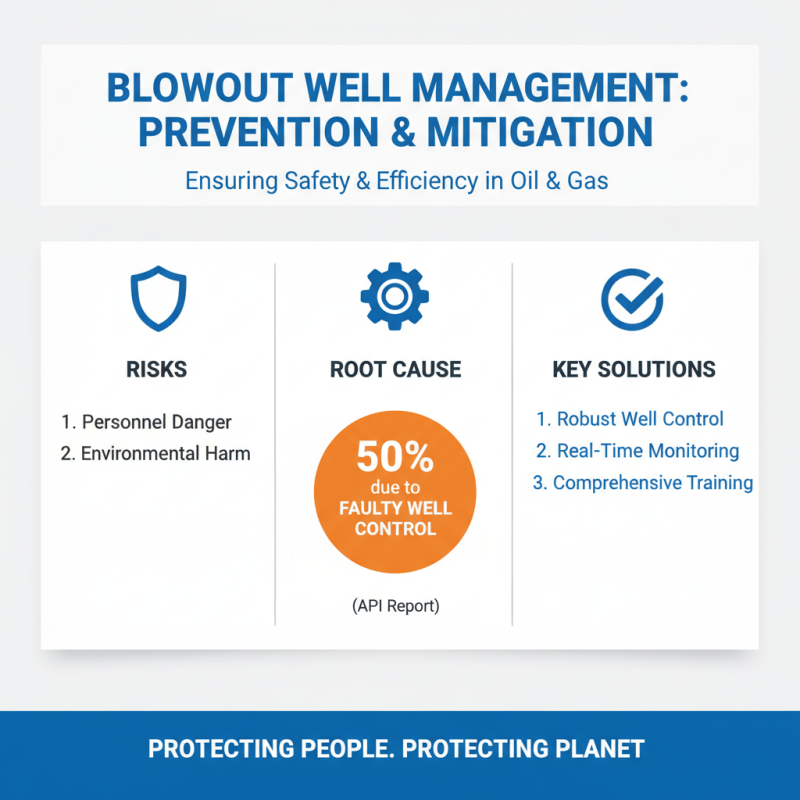
Blowout well management is a critical concern in the oil and gas industry, with blowouts posing significant risks to both personnel and the environment. Effective solutions for prevention and mitigation are essential for maintaining safety and operational efficiency. According to a report by the American Petroleum Institute, nearly 50% of blowouts occur due to a failure in the control of wellbore pressure. Implementing robust well control practices, incorporating real-time monitoring systems, and adhering to comprehensive training programs can drastically reduce these incidents.
Tips: Regularly conduct risk assessments and ensure all staff are familiar with the emergency response plans. Leveraging advanced technologies such as automated drilling systems can also enhance the ability to detect anomalies before they lead to a blowout.
Moreover, embracing a culture of safety within the workforce is paramount. Enhanced communication and collaboration among team members can lead to better decision-making during high-pressure situations. The Center for Offshore Safety highlights that companies with a strong safety culture report up to a 30% reduction in operational incidents. Constantly revisiting safety protocols and engaging in regular drills ensures preparedness for any potential blowout scenario.
Tips: Foster an environment where employees feel empowered to report safety concerns without fear. Utilizing simulation training can prepare teams for effective responses during real emergencies, increasing overall resilience against blowouts.