CONTACT
Choosing the best Oilfield Downhole Tools from China requires more than comparing prices or product catalogs. Downhole conditions vary sharply between shale, sandstone, offshore, and mature wells. A tool that performs reliably in one formation may fail under different torque, pressure, or temperature.
Chinese manufacturers now supply drilling jars, mud motors, stabilizers, fishing tools, packers, subs, and completion equipment. Many factories combine CNC machining, heat treatment, inspection systems, and field-service support. Still, manufacturing capability is only part of the decision. Buyers should examine material traceability, pressure testing, API or ISO certification, tolerance control, and documented performance in comparable wells.
Real field evidence matters.
Experienced operators often request inspection reports, maintenance records, and case studies from similar formations. They also check connection accuracy, elastomer quality, vibration resistance, and delivery consistency. A supplier may offer attractive specifications, yet limited after-sales support can increase downtime. That risk is easy to underestimate.
This guide will compare leading Chinese providers through practical criteria. It will consider tool design, operating range, customization, quality assurance, service response, and total ownership cost. Independent verification remains important, especially for high-pressure or high-temperature applications. No ranking can fit every project. That is a limitation worth admitting.
The strongest choice is usually the supplier that understands the well, communicates clearly, and supports the tool after shipment. Performance should be judged underground, not only on paper.
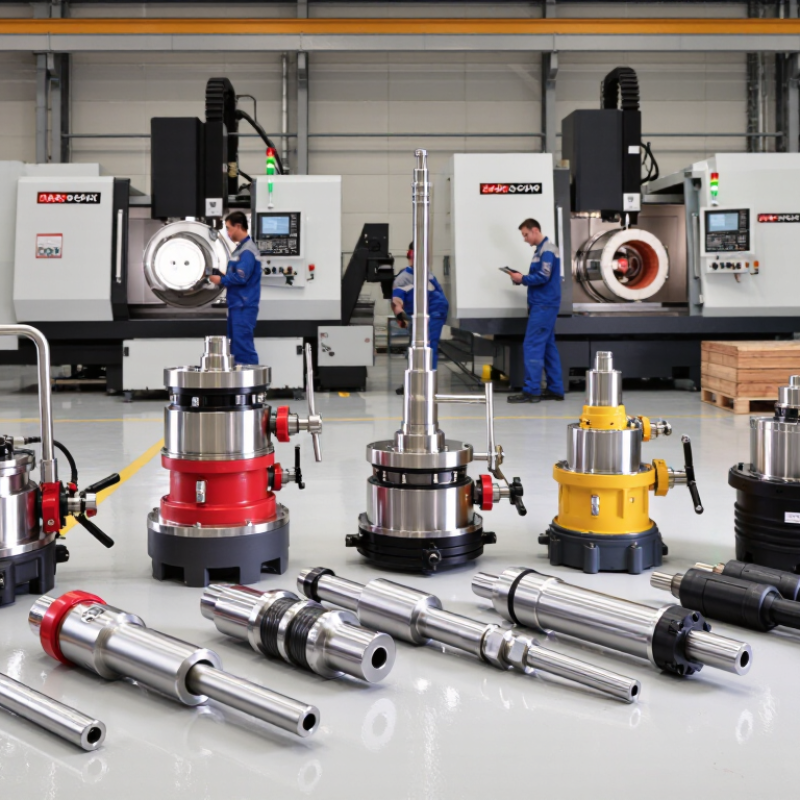
What defines the best Chinese downhole tools is not price alone. It is controlled design, verified materials, and predictable field performance. API 7-1 is important for rotary drill stem elements and related mechanical requirements. Buyers should check dimensional control, heat treatment records, connection accuracy, and full traceability. A tool may look excellent on a factory floor. It still needs evidence from demanding wells.
API 6A matters when downhole operations connect with wellhead and pressure-control equipment. It addresses pressure ratings, material classes, temperature ratings, testing, and documentation. Inspectors should compare nameplates with test certificates and inspection records. Small mismatches deserve attention. They can reveal weak document control. Pressure testing should include realistic hold times, not only a quick acceptance check.
ISO 14310 is central for packers and similar downhole equipment. It evaluates performance under pressure, temperature, load, and sealing conditions. Experienced users also review setting methods, retrieval behavior, elastomer selection, and previous applications. Field references are useful, but they can be incomplete. That is an uncomfortable point. A certificate does not guarantee perfect performance in every formation. Request manufacturing records, calibration evidence, nonconformance reports, and repair history. Evaluate the engineering response, not only the certificate count. Reliable suppliers explain limitations clearly and accept technical questions without vague promises.
What Defines the Best Chinese Downhole Tools: API 7-1, API 6A, and ISO 14310
This standards-scope chart shows where each international specification is directly relevant. API 7-1 covers rotary drill stem elements, API 6A covers wellhead and Christmas tree equipment, and ISO 14310 covers downhole equipment such as subsurface safety valves. A high-quality tool should be evaluated against the standard that matches its equipment category, together with documented testing, traceability, and field reliability.
Scope references: API Specification 7-1, API Specification 6A, and ISO 14310, Petroleum and natural gas industries — Downhole equipment — Subsurface safety valve equipment.
China’s MWD and LWD tools are becoming practical options for directional drilling. Their main value is timely data, not low purchase cost. While drilling, sensors can transmit inclination, azimuth, gamma ray, resistivity, and pressure readings. These measurements help crews adjust the well path before small errors become expensive corrections.
Industry guidance supports strict survey control. The International Association of Oil & Gas Producers recommends documented survey procedures, calibration records, and quality checks in its well-management guidance. SPE/IADC technical papers published between 2022 and 2024 commonly discuss 1–2% survey accuracy targets for modern directional workflows. That figure needs context. It may describe positional uncertainty, not the accuracy of every sensor reading. Geology, magnetic interference, toolface vibration, and telemetry loss still matter.
Field engineers should inspect more than a specification sheet. Useful checks include temperature ratings, pressure tolerance, battery endurance, sensor redundancy, and data-recovery performance. A stable mud-pulse signal is especially important in long horizontal sections. Some Chinese downhole systems now support faster sampling and near-real-time formation evaluation, according to recent SPE conference case studies. However, published results are not always comparable. Testing depth, formation type, and quality-control methods can differ widely.
A sensible trial should compare the tool with an independent survey reference. Record connection time, transmission gaps, shock exposure, and post-run calibration drift. The best tool is not necessarily the newest one. It is the one that produces repeatable data under actual well conditions.
Selecting Chinese downhole tools starts with drilling conditions, not country of origin. Positive displacement motors (PDMs) are useful when surface rotation cannot deliver stable downhole torque. A 100–150 RPM motor range suits controlled directional work and softer formations. It can reduce shock loading while maintaining steady bit engagement. The 200–300 RPM range is better for higher penetration rates in compatible formations. However, faster rotation can amplify vibration, elastomer wear, and bit damage. Formation response matters more than catalog speed.
High-torque drilling requires a motor with a suitable power section, not simply a larger model. Review torque curves, pressure drop, flow range, bend setting, and stall behavior before mobilization. SPE field studies commonly link motor performance with differential pressure and flow stability, while the U.S. Department of Energy’s Geothermal Drilling Cost Study places drilling near 30–50% of project cost. That figure explains why small efficiency losses deserve attention. Chinese PDMs may offer practical configurations across 100–300 RPM, but field validation remains essential. Run a controlled surface test. Check rotor clearance, elastomer condition, and connection quality. The imperfect part is prediction: laboratory torque rarely matches a vibrating, abrasive wellbore. Use real-time standpipe pressure, torque, and ROP trends, then adjust carefully. A cheaper motor is not automatically the economical choice.
What Are the Best Oilfield Downhole Tools From China?
Hydraulic and mechanical jars convert stored drillstring energy into controlled downhole impact. Hydraulic jars use metered fluid flow and a delay chamber. Mechanical jars trigger through calibrated mandrels, springs, and locking profiles. The choice depends on depth, deviation, temperature, and stuck-point uncertainty. A stronger tool is not always better. Excessive impact can damage connections, shock-sensitive instruments, or the formation.
The IEA’s Oil 2024 report projects global oil demand to reach about 105.4 million barrels per day by 2030. Drilling remains active, but wells are becoming more directional and mechanically demanding. In these conditions, hydraulic jars offer timing control during tension buildup. Mechanical jars can provide quicker action when operating conditions are predictable. Field data still matters more than catalog energy ratings. Actual impact depends on stretch, friction, mud properties, and jar placement. Engineers sometimes overestimate downhole force. That mistake deserves more attention.
Tips: Confirm the jar’s temperature and pressure ratings before running it. Match the tool to the bottomhole assembly, not only the fishing objective. Record pre-job calculations, including expected overpull and acceleration. Inspect threads, seals, and mandrel travel after every demanding run. A short delay can change the entire recovery sequence. Use independent inspection records where possible. Safety margins should be reviewed, not assumed.
| Evaluation Dimension | Hydraulic Jar | Mechanical Jar | Operational Meaning |
|---|---|---|---|
| Primary Operating Principle | Hydraulic metering delays mandrel movement before releasing stored drillstring energy. | Mechanical mandrel, spline, and trigger components release the impact after a preset travel or load condition. | Both tools convert stored axial energy into an upward or downward impact to help free stuck pipe. |
| Impact Direction | Can be configured for upward impact, downward impact, or bidirectional operation, depending on the tool design. | Available in up-jar, down-jar, and bidirectional configurations. | The selected direction should match the expected sticking mechanism and the planned fishing procedure. |
| Impact Control | Highly controllable through hydraulic delay, applied tension or compression, and release settings. | Controlled mainly through mechanical travel, applied load, and the tool’s preset operating geometry. | Hydraulic jars generally offer finer timing control when operating conditions vary during the job. |
| Typical Activation Sequence | Apply the required axial load, allow the metering system to complete its delay, then release the stored energy. | Apply the required axial load and mechanical travel until the trigger releases the mandrel. | Correct surface weight indicator readings and accurate load calculations are essential for both types. |
| Delay Adjustability | Often adjustable by changing operating conditions or using a tool-specific delay setting. | Usually limited compared with hydraulic designs; timing is primarily determined by mechanical configuration. | Adjustable delay can help reduce premature firing while the drillstring is being positioned. |
| Impact Intensity | Depends on stored drillstring energy, applied load, stroke, fluid properties, and hydraulic release characteristics. | Depends on stored drillstring energy, applied load, stroke, and mechanical release characteristics. | Impact energy is not determined by jar type alone; it must be calculated for the complete bottom-hole assembly and operating condition. |
| Temperature Considerations | Hydraulic fluid viscosity, seal materials, and metering performance must be checked for downhole temperature. | Lubrication, clearances, elastomers, and mechanical material limits must be checked for downhole temperature. | High-temperature wells require verified temperature ratings for the complete tool, not only the pressure body. |
| Pressure Compatibility | Requires verification of body pressure rating, internal pressure balance, seals, and hydraulic chamber performance. | Requires verification of body pressure rating, seals, mandrel clearances, and pressure effects on activation loads. | Tool pressure rating should exceed the planned differential-pressure envelope with an appropriate engineering margin. |
| Common BHA Position | Frequently placed near the drill collars or in a jar-and-accelerator assembly, subject to the BHA program. | Frequently placed near the drill collars or above the stuck-point area, subject to the BHA program. | Placement affects the amount of elastic energy available and the portion of the drillstring that contributes to impact. |
| Best-Fit Operating Conditions | Variable sticking conditions, extended fishing operations, and applications requiring controlled timing. | Straightforward operating programs where immediate, robust mechanical response is preferred. | The best choice depends on well profile, stuck-point uncertainty, temperature, pressure, BHA design, and crew procedures. |
| Directional-Well Suitability | Suitable for directional and horizontal wells when the tool’s deviation, torque, drag, and buckling limits are verified. | Suitable when mechanical travel and friction effects remain within the manufacturer’s documented operating limits. | In high-angle wells, torque-and-drag calculations should be completed before selecting jar size and operating loads. |
| Maintenance Focus | Inspect seals, hydraulic fluid condition, metering orifices, chambers, mandrel surfaces, and pressure-test results. | Inspect splines, lugs, mandrel shoulders, springs, trigger components, seals, and wear surfaces. | Documented inspection, redress, and pressure-testing procedures reduce the risk of inconsistent activation. |
| Failure Risks if Misapplied | Premature or delayed firing, degraded impact performance, seal leakage, or temperature-related metering changes. | Unexpected activation, incomplete release, excessive wear, or reduced travel caused by friction, debris, or incorrect loading. | Operating limits, jar position, load windows, and firing procedures must be included in the drilling program. |
| Selection Data Required | Tool OD and ID, connection, maximum tensile and compressive loads, stroke, pressure rating, temperature rating, delay behavior, and impact direction. | Tool OD and ID, connection, maximum tensile and compressive loads, stroke, pressure rating, temperature rating, trigger loads, and impact direction. | Request a complete technical datasheet and dimensional drawing before final BHA approval. |
| Quality Verification for Procurement | Review material certificates, dimensional inspection, pressure-test records, calibration data, seal traceability, and functional-test results. | Review material certificates, dimensional inspection, pressure-test records, heat-treatment records, component traceability, and functional-test results. | For non-branded sourcing, objective inspection records are more useful than appearance or catalog claims alone. |
| Applicable Industry Practice | Confirm the applicable API or ISO requirements, customer specifications, connection standards, inspection class, and local well-control procedures for the intended service. | Standards and acceptance criteria should be confirmed for the specific tool design and service environment; they should not be assumed solely from the tool category. | |
| Practical Recommendation | Prefer when controlled timing, variable operating loads, or complex fishing conditions are key requirements. | Prefer when simple mechanical operation, direct response, and easier field troubleshooting are key requirements. | Neither type is universally best. Selection should be based on engineering calculations, verified ratings, inspection records, and the planned recovery method. |
Under 10,000–20,000 psi, packer performance depends on more than rated pressure. Seal design, metallurgy, temperature, tubing movement, and setting force all matter. A Chinese-made packer should be evaluated against API Spec 11D1 and ISO 14310 validation requirements, not only a catalogue number. ISO 14310 uses V0 to V6 validation grades, with V0 representing the most demanding gas-sealing qualification. That distinction is easy to miss.
Pressure cycling exposes weak designs. During qualification, engineers should examine seal extrusion, element recovery, anchoring, and leakage after repeated cycles. A 20,000 psi label means little without temperature, differential-pressure, and load data. In practical well reviews, debris around slips often creates more trouble than the nominal pressure rating. Small details matter. Surface finish matters too.
Fishing tools face a different challenge. They must engage damaged tubing, parted wire, or a stuck completion without worsening the failure. Overshots, spears, mills, and hydraulic cutters need verified tensile, torque, and collapse limits. API and ISO documents provide useful design references, while SPE technical papers often emphasize modelling and controlled field trials. Still, laboratory success is not field certainty. I would request full test curves, not selected photographs. The uncomfortable question is whether the tool can be released safely after high-load engagement. That answer should come from witnessed testing, clear operating limits, and documented failure analysis.