7 Pipe Elevators Buying Tips for Global Buyers
Buying Pipe Elevators for international drilling operations requires more than comparing prices and catalog photographs. These lifting tools connect directly with crew safety, tubular handling efficiency, and equipment reliability. A suitable model must match the pipe size, elevator type, rated load, operating method, and rig configuration. Small mismatches can create delays at the wellsite.
This guide presents seven practical buying tips for global buyers. It focuses on supplier capability, material quality, load testing, dimensional accuracy, documentation, delivery planning, and after-sales support. Experienced buyers should request drawings, inspection reports, test certificates, and clear product identification before placing an order. Check the latch, hinges, pins, links, and contact surfaces carefully. These details often reveal manufacturing quality more clearly than polished product images.
Price deserves attention.
A lower quotation may exclude testing, protective packaging, spare parts, or technical support. That difference can become expensive during installation or urgent replacement. Buyers should also confirm applicable industry requirements and local import procedures with qualified professionals. Requirements vary between countries, companies, and operating environments. No single checklist fits every project.
Even careful purchasing can involve uncertainty. Product descriptions may be incomplete, and translation errors can affect technical specifications. Ask direct questions and record every answer. A supplier that explains limitations honestly is often more reliable than one promising everything. With documented checks and realistic expectations, global buyers can select Pipe Elevators that support safer handling and more predictable field performance.
Match API Spec 8C Rated Capacity to the Full Pipe-String Weight
7 Pipe Elevators Buying Tips for Global Buyers
Match API Spec 8C Rated Capacity to the Full Pipe-String Weight
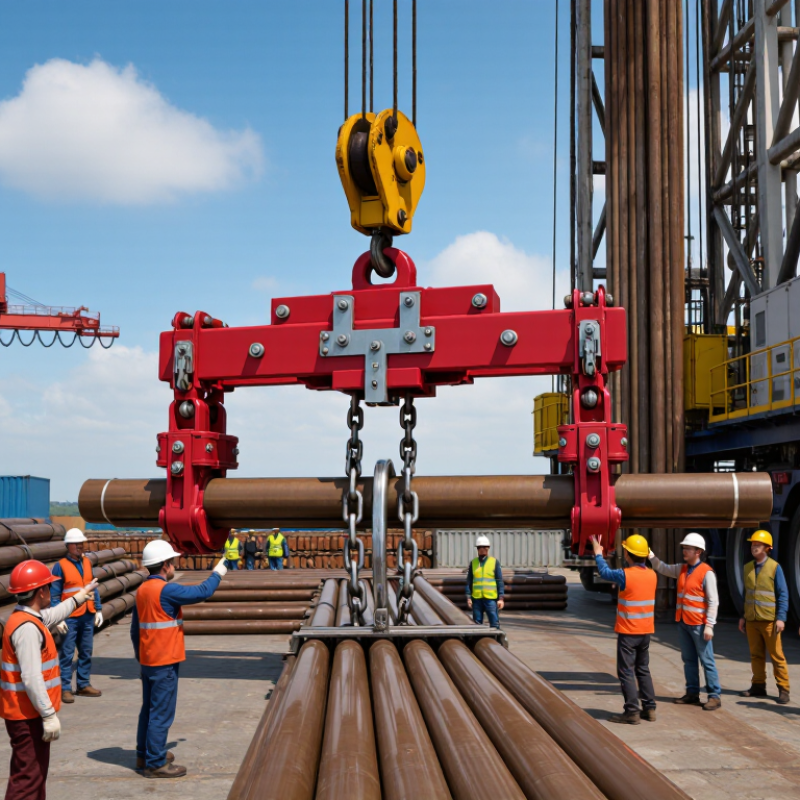
Pipe elevators must carry the complete suspended string, not only the tubulars. Include tool joints, subs, elevators, slips, mud weight, and possible overpull. For example, a 5,000-meter string at 25 kilograms per meter weighs 125,000 kilograms before accessories. Buoyancy may reduce submerged weight, but handling loads can rise suddenly. API Specification 8C provides the rated-capacity framework for lifting equipment. Treat its rating as a minimum engineering reference, not a comfortable target.
Buying tip: Request the load calculation sheet. Check whether capacity is stated in metric tonnes or short tons. Confirm the load path, lifting angle, latch design, and inspection status. The IADC Drilling Manual recommends considering dynamic effects during hoisting and tripping. A static calculation can look safe and still miss shock loading.
Buying tip: Compare the elevator rating with the heaviest planned pipe string. Add a documented margin for drag, sticking, and uncertain fluid density. The IOGP Safety Performance Indicators report tracks high-potential events and exposure hours, showing why controlled lifting deserves measurable verification. Do not accept “standard size” as proof. Ask for API compliance documents, material certificates, and inspection records. I would also recheck the calculation after changing mud weight or tubular grade. Small changes matter.
Choose Elevator Type by Tubing, Casing, and Drill-Pipe Size Range
A pipe elevator must match the pipe’s actual outside diameter and lifting shoulder, not just the product label. API Specification 5DP lists common drill-pipe sizes including 2⅜, 2⅞, 3½, 4, 4½, 5, and 5½ inches. API Specification 5CT covers casing and tubing dimensions. Use these published size tables to build a verified string-by-string selection list before ordering.
For tubing, check the exact nominal size and connection shoulder; similar-looking pipe can require different handling equipment. For casing, confirm both the pipe diameter and the elevator’s rated capacity. Drill pipe needs particular attention to the tool-joint or shoulder profile. A size-range label alone is not enough.
Small detail. Big consequence.
Compare the manufacturer’s elevator drawings and rated load with the pipe tally, then verify compatibility against the applicable API 7K requirements. Check the smallest and largest sizes in the planned range, plus any mixed strings. This check is easy to rush. It shouldn’t be. Record the pipe OD, connection type, and required capacity for each job; have the rig team confirm the fit before lifting. Standards describe dimensions and equipment requirements, but actual wear, tolerances, and pipe condition still matter. That final inspection can catch a mismatch the paperwork misses.
Verify API 8C and ISO 13535 Design, Testing, and NDE Records
When buying pipe elevators globally, verify the standard records before comparing price or delivery time. API Specification 8C and ISO 13535 address hoisting equipment, but their applicable editions and contract requirements must be checked carefully. Request approved design drawings, rated load calculations, material certificates, heat numbers, and traceability for every load-bearing component.
Testing evidence should be specific. Ask for documented proof-load results, functional checks, dimensional inspection, and calibrated equipment records. NDE files should identify the method, inspector qualification, acceptance criteria, equipment calibration, and repair history. Magnetic particle, liquid penetrant, ultrasonic, or radiographic testing may apply to different components. A certificate without these details is weak evidence.
The ILO estimates 2.78 million workers die annually from work-related causes, including occupational accidents and diseases. IOGP safety performance reports also track lifting exposure, high-potential events, and fatal incidents across oil and gas operations. These data support a practical buying rule: treat traceability as a safety control, not paperwork. I have seen tidy document packages hide missing revisions or unclear signatures. That risk deserves attention. Confirm the manufacturer’s quality plan, independent inspection points, nonconformance closures, and final data book before shipment. Verify that the nameplate matches the tested configuration, because a small dimensional change can affect engagement, balance, and load behavior.
The chart shows an illustrative buyer-priority score from 1 to 5 for seven verification areas when sourcing pipe elevators. Confirm the applicable edition of API Specification 8C and ISO 13535, and request objective design, testing, material-traceability, and NDE records before approval. The scores are a procurement-planning aid, not a certification or compliance result.
Assess Latch Safety, Hinge Strength, and 360° Rig-Site Handling
Tip 1: Check the latch with gloved hands. It should close fully, resist accidental release, and provide a clear locked position. Ask for test records, not only catalog claims. Tip 2: Inspect the latch body for rounded edges and visible wear points. Mud, ice, and drilling fluid can hide small defects.
Tip 3: Examine hinge pins, bushings, welds, and stop points. A strong hinge should move smoothly without side-to-side looseness. Tip 4: Confirm the elevator’s rated load matches your pipe sizes and lifting plan. Keep manufacturer drawings and inspection intervals available for your site team. In my experience, tiny gaps often become expensive problems. Still, field conditions can expose weaknesses that factory checks miss.
Tip 5: Test 360° rig-site handling before purchase. The elevator should open, close, and rotate without striking nearby equipment. Check clearance around the slips, well center, handrails, and power tongs. Tip 6: Operate the controls from practical working positions, not only from a clean workshop floor. Operators need a firm grip and a clear view of the latch indicator. Tip 7: Review maintenance access. Grease points, hinge pins, and locking parts should be reachable during routine inspections. A useful trial includes cold gloves, poor lighting, and wet surfaces. It may feel overly cautious. That is the point. Ask an independent competent inspector to witness the functional test, record findings, and challenge any unclear safety assumption.